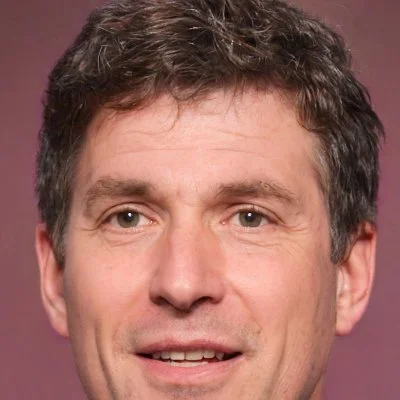
IFG Hired Kevin Keefe. The Bigger Story Is Independent Broker-Dealer Survival
InvestmentNews reported that Independent Financial Group tapped Kevin Keefe as president and chief operating officer, giving the San Diego-based independent broker-dealer a veteran operator at a time when privately held firms are fighting to stay relevant in a consolidating market.
Keefe’s title matters because this is not only a personnel announcement. IFG is one of the remaining larger privately held independent broker-dealers working with independent contractor advisors. InvestmentNews reported that the firm has 550 producing reps and advisors and generates about $325 million in annual revenue, according to co-founder and chief marketing officer Dave Fischer.
IFG’s own announcement said Keefe will help shape the firm’s growth strategy while overseeing compliance, operations, supervision and product marketing. That combination is important. In today’s independent broker-dealer market, growth is not just about adding advisors. It depends on whether the firm can support those advisors with clean supervision, strong service, efficient operations and a platform that still feels personal.
The appointment also lets founder Scott Heising focus exclusively on his CEO role. That detail may sound administrative, but it says something about IFG’s next phase. As privately held broker-dealers try to compete with mega-firms, private-equity-backed platforms and fast-growing hybrids, leadership depth becomes part of the strategy.
TL;DR
IFG named Kevin Keefe president and COO: The firm added a veteran independent broker-dealer and RIA executive to its senior leadership team.
The role is operationally important: Keefe will help shape growth strategy while overseeing compliance, operations, supervision and product marketing.
IFG is still privately held: That makes the move especially relevant as consolidation reshapes the independent broker-dealer market.
The firm has scale, but not mega-firm scale: InvestmentNews reported 550 producing reps and advisors and about $325 million in annual revenue.
The leadership change frees Scott Heising: IFG’s founder can focus exclusively on the CEO role while Keefe handles president and COO responsibilities.
The advisor takeaway: Smaller independent platforms must prove they can offer culture and autonomy without falling behind on service, compliance and growth infrastructure.
The client takeaway: Stronger operations and supervision can indirectly affect service quality, account handling, advisor support and long-term platform stability.
A President And COO Hire Is Really An Operating-Model Decision
A president and COO role can sound like a routine executive appointment. At an independent broker-dealer, it is more than that.
The president and COO often sits between vision and execution. The CEO may set the strategic direction. The recruiting and marketing team may tell the firm’s story. Advisors may focus on serving clients and growing practices. But the COO function must make the platform work every day.
That means handling the systems and people behind compliance review, supervision, onboarding, product access, field support, operations, advisor service and internal coordination. If those areas are weak, advisor recruiting becomes harder. If those areas are strong, the firm can tell a more credible story to advisors who want independence without operational chaos.
Why Keefe’s Job Scope Matters
Compliance oversight: Advisors need a platform that can protect the business without turning every review into a bottleneck.
Operations leadership: Account opening, transfers, service requests and daily support affect whether advisors feel the platform is easy to use.
Supervision responsibility: Independent advisors need clear rules, consistent review and practical oversight.
Product marketing control: Product access and platform positioning can shape how advisors serve clients and explain solutions.
Growth strategy input: A president and COO can connect recruiting ambitions with the operational capacity needed to support new advisors.
This is why the appointment should not be read as only a senior-title change. IFG appears to be adding an operator who can help turn its independence message into a more scalable platform.
IFG’s Private Ownership Is The Subtext Of The Story
The most important word in this story may be “privately held.”
Independent broker-dealers used to be full of founder-led, privately owned firms with several hundred advisors across the country. Many of those firms built loyal advisor communities by offering a more personal alternative to wirehouses and large broker-dealers.
That landscape has changed. Consolidation, private equity investment, aging founders, succession pressure and rising technology costs have pushed many independent firms to sell, merge or join larger platforms. InvestmentNews noted that aging leadership, owners seeking liquidity and private equity buyers have changed the market that once supported many independent broker-dealers.
IFG’s response is different. Instead of announcing a sale, the firm is deepening its leadership bench. That does not guarantee long-term independence, but it does suggest the firm wants to compete from a stronger operating position.
What Privately Held Broker-Dealers Must Prove Now
They can scale without selling: Advisors want to know whether the firm can keep investing without needing a near-term buyer.
They can support technology demands: Client portals, digital onboarding, cybersecurity and integrated advisor tools are expensive.
They can maintain service culture: A smaller platform loses its main advantage if service becomes slow or impersonal.
They can handle succession pressure: Founder-led companies need credible next-generation leadership and continuity.
They can recruit against mega-firms: Advisors comparing platforms need a reason to choose culture and autonomy over sheer size.
That is where Keefe’s arrival becomes strategic. A private firm cannot rely only on founder reputation forever. It needs a leadership structure that tells advisors the platform has a future.
Keefe Brings A Modernization Resume To A Founder-Led Platform
IFG’s official announcement on Kevin Keefe described him as a financial services executive with more than 30 years of experience across the independent broker-dealer and RIA space.
That background fits the current moment because IFG is not hiring someone with only a narrow operational specialty. Keefe has worked across several major industry settings. IFG said his experience includes serving as president and CEO of First Allied Securities, head of wealth management at Advisor Group, now Osaic, executive roles at LPL Financial during its transition to a public company and senior positions with BNY Mellon, BISYS, Fidelity Investments and NATIXIS.
Most recently, IFG said Keefe served as CEO of Realta Wealth, where he led a modernization effort that included rebranding the business, improving advisor services, expanding revenue streams and building a new executive leadership team.
Why The Realta Experience Is Especially Relevant
Modernization work: IFG needs leadership that understands how older platforms update without losing their identity.
Advisor-service focus: A firm competing on culture must keep advisor service strong as it grows.
Revenue expansion: Smaller independent broker-dealers need multiple growth levers beyond simple headcount.
Executive team building: A founder-led firm benefits when leadership responsibility is spread across a deeper bench.
Change management: Advisors can resist change if it feels imposed, so modernization must be explained and executed carefully.
That makes Keefe’s background useful for IFG’s current problem. The firm needs to grow, but it cannot look like every other consolidating platform. It needs to modernize while still sounding like IFG.
IFG’s Growth Goal Raises The Stakes
InvestmentNews reported that Fischer said IFG’s goal is to grow over time into a firm with $1 billion in annual revenue. That is a large ambition for a privately held independent broker-dealer.
The goal is not impossible, but it changes the leadership requirements. A firm at $325 million in annual revenue can rely on culture, relationships and founder energy to a point. A firm trying to reach $1 billion needs repeatable systems. It needs stronger recruiting discipline, more scalable operations, clear supervisory processes, deeper technology planning and an advisor experience that can survive faster growth.
This is where many firms struggle. Growth can improve resources, but it can also weaken service if the home office cannot keep up.
The Growth Gap IFG Has To Cross
Growth Need
Why It Matters
Risk If It Falls Behind
Advisor recruiting
More advisors are needed to expand revenue and market presence
Recruiting slows if the platform story is unclear
Advisor retention
Existing advisors must believe growth will not dilute service
Productive advisors may leave for larger or better-resourced firms
Compliance capacity
More advisors create more supervisory volume
Review delays and inconsistent oversight can increase risk
Operations scale
Account service must remain fast as volume rises
Advisors may feel the firm is outgrowing its support model
Technology investment
Digital tools affect advisor and client experience
The firm may look dated compared with larger competitors
Leadership depth
Growth requires more than founder-led decision-making
Strategy can bottleneck around a small executive group
Keefe’s appointment helps address that last point immediately. It gives IFG another senior executive responsible for execution while Heising concentrates on CEO-level strategy and financial direction.
Advisor Impact: IFG Is Selling Independence, But Advisors Will Judge Support
Independent advisors do not join a platform only because it uses the word “independence.” They want to know what independence means in practice.
Keefe told InvestmentNews that IFG’s focus is on service, flexibility and creating a community for advisors and home office staff. He also said the goal is to deliver a definition of independence defined by the advisor and not the firm.
That line is important because many independent advisors feel that some large platforms have become more standardized. The larger the broker-dealer, the harder it can be to preserve a boutique feel. At the same time, advisors still need the resources of a serious platform.
IFG’s challenge is to make both sides credible: independence and infrastructure.
What Advisors May Watch After The Keefe Hire
Service speed: Advisors will notice whether operations, supervision and product support become faster or more organized.
Platform flexibility: Advisors will look for proof that IFG can support different practice models without forcing unnecessary standardization.
Compliance practicality: Strong oversight matters, but advisors also need clear, usable processes.
Recruiting message: Prospective advisors will want to understand how IFG differs from larger IBDs, hybrids and aggregators.
Leadership access: One advantage of a smaller private platform is the ability to reach decision-makers.
Growth without dilution: Existing advisors will want growth to improve resources without weakening the culture they joined.
This is why the appointment is both an internal and external message. It tells current advisors that IFG is strengthening its operating bench. It tells prospective advisors that IFG wants to grow without giving up its independent identity.
Compliance And Supervision Are Now Growth Functions
Compliance used to be treated mainly as a risk-control department. That view is too narrow now.
For an independent broker-dealer, compliance and supervision are part of the advisor experience. If the process is inconsistent, slow or unclear, advisors become frustrated. If the process is weak, the firm faces regulatory and reputational risk. If the process is thoughtful, it can support growth by giving advisors confidence that the platform is stable.
Because Keefe’s role includes compliance, operations and supervision, IFG is effectively putting several growth-critical functions under one senior operator.
Why Supervision Can Shape Recruiting
Advisor confidence: Advisors want to know the firm understands their business and will not surprise them with unclear rules.
Client protection: Strong supervision helps reduce unsuitable recommendations, disclosure gaps and recordkeeping problems.
Operational consistency: Clear processes reduce confusion between the home office and the field.
Transition support: Advisors joining the platform need clean onboarding, licensing, paperwork and communication review.
Product oversight: A growing platform must monitor how products are marketed, approved and used with clients.
That matters in today’s environment because broker-dealers are being judged not only by asset growth, but also by whether their systems can support that growth responsibly.
Recruiting Leadership Is Becoming A Market Signal
IFG’s Keefe appointment also fits a broader industry pattern: wealth firms are treating leadership hires as part of the recruiting message.
Advisor moves get most of the headlines, but executive hires can matter just as much. A strong leadership appointment can tell the market that a firm is investing in growth, building a more durable structure and preparing to compete more aggressively.
NJ Financial News has covered a similar trend in howJanney tapped Kathy Capuano as advisor recruiting became a bigger growth weapon. The firms are different, but the theme is related. Advisor recruiting is no longer a side function. It is becoming a strategic operating priority.
IFG’s later recruiting moves also support that reading.InvestmentNews reported that IFG expanded its recruiting reach with key promotions in the West and Mountain regions, including expanded business development roles for Chad Cristo and Kelsey Hasterlik. That suggests Keefe’s arrival was not an isolated leadership update. It fits a broader push to professionalize growth.
What A Strong Recruiting Infrastructure Needs
Clear platform identity: Advisors need a simple reason to consider the firm.
Regional business development: National growth often depends on local and regional relationship-building.
Transition resources: Recruits need help moving accounts, staff workflows and client communication.
Advisor-service proof: The recruiting pitch must match the post-transition experience.
Leadership credibility: Advisors want confidence that senior leaders understand independent practices.
A firm can pay for attention. It keeps advisors by delivering what the pitch promised.
Client Implications: Better Operations Can Show Up Quietly
Clients may never know that IFG named a new president and COO. They may not know who Keefe is or which executive oversees operations. But they can still feel the effect if the platform improves.
For clients, broker-dealer operations show up in practical ways: account paperwork, trade processing, statement accuracy, product availability, service response times, disclosure delivery and advisor support. When these systems work well, clients may not think about them. When they break down, clients notice quickly.
That is why leadership over operations and supervision matters indirectly to investors. Advisors may be the face of the relationship, but the broker-dealer platform supports the machinery behind the relationship.
Where Clients May Feel Stronger Platform Execution
Faster account handling: Cleaner operations can reduce delays in account opening, transfers and updates.
Clearer disclosures: Better supervision can improve how clients receive and understand required documents.
More consistent service: Advisors with stronger home-office support can spend more time on planning and client communication.
Better product review: Stronger product oversight can help advisors use approved solutions more responsibly.
Longer platform stability: A deeper leadership bench may reduce disruption if founders or senior executives shift responsibilities.
Clients do not need to follow broker-dealer leadership news closely, but they benefit when their advisor’s platform is well run.
The Consolidation Question Still Hovers Over IFG
The independent broker-dealer market is full of consolidation pressure. That makes any leadership move at a privately held firm more interesting.
IFG has not announced a sale in this story. But the broader industry context matters because advisors often ask privately held firms about long-term ownership. Will the firm stay independent? Will it sell to a larger broker-dealer? Will private equity eventually become involved? Will founder succession change the culture?
Those are reasonable questions because advisors build businesses around platform stability. A surprise ownership change can affect technology, compliance, service, branding and client communication.
Questions Advisors May Ask About IFG’s Future
Does leadership depth reduce succession risk? A stronger executive bench can reassure advisors that the firm is not dependent on one founder.
Can IFG fund growth independently? Advisors will want to know whether the firm can invest enough in technology, compliance and recruiting.
Will culture survive scale? Growth can strain the community feel that smaller platforms use as a differentiator.
Is a future sale off the table? Advisors may ask directly, even if firms rarely answer with permanent certainty.
How will ownership affect advisor control? Independent advisors care about whether future changes will narrow their flexibility.
Keefe’s appointment does not answer every ownership question. But it gives IFG a stronger argument that it is preparing for growth as an operating company, not simply waiting for an exit.
What IFG Still Has To Prove
A leadership hire creates a stronger story, but execution will decide whether the story works.
IFG must show that the new structure improves the advisor experience. That may mean faster operations, clearer supervision, better product support, stronger recruiting coordination and more confidence that the firm can scale.
The hardest part will be maintaining culture while pursuing a much larger revenue goal. Advisors who choose privately held broker-dealers often value access, familiarity and community. If growth makes the firm feel distant or bureaucratic, IFG could lose the very advantage it is trying to protect.
The Next Tests For IFG
Advisor retention: Existing advisors must feel the leadership change improves support.
Recruiting momentum: New advisors must see IFG as a credible alternative to larger platforms.
Operational speed: Daily service must remain responsive as the firm grows.
Compliance consistency: Stronger supervision should feel clear and professional, not unpredictable.
Technology relevance: IFG must keep up with digital expectations from advisors and clients.
Culture protection: Growth should not erase the community identity the firm wants to defend.
That is the balance Keefe now helps manage. IFG wants to grow, but not become just another mega-platform.
Bottom Line: IFG Is Building A Bigger Bench For A Tougher Broker-Dealer Market
Independent Financial Group’s decision to hire Kevin Keefe as president and COO is more than an executive update.
It is a sign that privately held broker-dealers need deeper leadership, stronger operations and a sharper growth strategy to compete in a market dominated by consolidation. IFG still has a valuable message: service, flexibility, community and advisor-defined independence. But that message only works if the platform can execute at a high level.
Keefe’s background gives IFG experience in modernization, advisor service, leadership building and independent broker-dealer growth. His new responsibilities also place him close to the functions that matter most for advisors: compliance, operations, supervision and product support.
For advisors, the appointment is worth watching because it may influence the kind of firm IFG becomes. For clients, the impact will be less visible but still meaningful if stronger operations and supervision improve the advisor experience. For the industry, the message is clear: the remaining privately held broker-dealers cannot rely on nostalgia for independence. They have to prove they can scale it.
Frequently Asked Questions About IFG Hiring Kevin Keefe
Who Is Kevin Keefe?
Kevin Keefe is a financial services executive with extensive experience in the independent broker-dealer and RIA space. IFG said his career includes leadership roles at First Allied Securities, Advisor Group, now Osaic, LPL Financial, BNY Mellon, BISYS, Fidelity Investments, NATIXIS and Realta Wealth.
What Role Will Kevin Keefe Have At IFG?
Keefe will serve as president and chief operating officer of Independent Financial Group. IFG said he will help shape the firm’s growth strategy while overseeing compliance, operations, supervision and product marketing.
Why Does This Hire Matter For IFG?
The hire matters because IFG is trying to grow while remaining a privately held independent broker-dealer. Adding a president and COO gives the firm more leadership depth and lets founder Scott Heising focus exclusively on his CEO role.
What Does This Mean For IFG Advisors?
For IFG advisors, the appointment could affect the platform’s service model, compliance process, operations, product support and growth strategy. The key question is whether the new leadership structure helps IFG become more scalable without losing its advisor-focused culture.
Why Are Privately Held Broker-Dealers Under Pressure?
Privately held broker-dealers are under pressure because the industry has consolidated heavily. Larger firms and private-equity-backed platforms can invest aggressively in technology, recruiting, compliance and acquisitions. Smaller independent firms must prove they can still offer strong service, modern infrastructure and long-term stability.
Further Reading
Independent Financial Group Taps Industry Veteran Keefe As New President, COO: InvestmentNews’ report on IFG hiring Kevin Keefe and the firm’s privately held broker-dealer growth goals.
Independent Financial Group Hires Industry Veteran Kevin Keefe As President And Chief Operating Officer: IFG’s official announcement detailing Keefe’s responsibilities, career background and strategic role.
IFG Names Kevin M. Keefe President And COO To Enhance Growth: Wealth Solutions Report’s coverage of the leadership change and Scott Heising’s shift to focus on the CEO role.
IFG Expands Recruiting Reach With Key Promotions In West And Mountain Regions: InvestmentNews’ follow-up coverage showing how IFG continued building its business development structure after the Keefe hire.
Janney Taps Kathy Capuano As Advisor Recruiting Becomes A Bigger Growth Weapon: Related NJ Financial News coverage on how leadership appointments are becoming part of advisor recruiting and market-growth strategy.