WCG Hired A Platform Operator. That Says A Lot About Its Growth Plan.
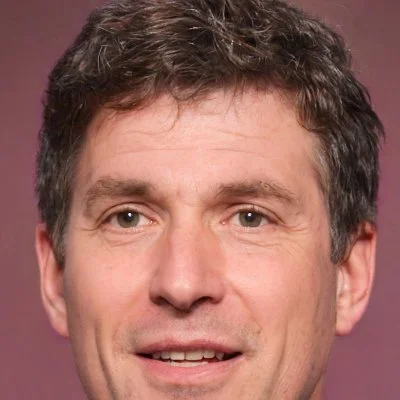
In the InvestmentNews report, Wealth Consulting Group named former LPL Financial executive Andy Kalbaugh as president, bringing him out of retirement to help lead the Las Vegas-based hybrid RIA’s next growth phase.
This was not just another executive hire.
WCG had already grown from a small regional RIA into a national hybrid platform. It launched its RIA in 2014 with 30 advisors and about $800 million in assets under advisement. By May 31, 2025, it had 123 advisors across 43 branches overseeing $8.8 billion. That growth made the firm large enough to need a more formal operating structure, but still small enough to keep selling advisor independence as a core part of its identity.
Kalbaugh’s role sits directly inside that tension.
At LPL, he had overseen advisor engagement, retention and growth across one of the largest independent advisor platforms in the country. At WCG, he was asked to work with founder and CEO Jimmy Lee to scale advisor solutions, expand the partner channel, support business transitions and help advisors manage succession and monetization.
That is the real story. WCG did not hire Kalbaugh only because he knew LPL. It hired him because midsize hybrid RIAs now need executives who understand how to turn advisor culture into repeatable infrastructure.
The later update makes the move look more strategic. WCG soon added a non-fiduciary advisory board with Stuart DePina, Jason Ehrlich and Paul Kim. Then Ehrlich moved inside the firm as chief financial officer and head of corporate development. WCG’s current snapshot now lists 133 advisors, 56 branch offices and about $12.1 billion in advisory and brokerage assets.
So Kalbaugh’s appointment was not an isolated leadership change. It was the first visible move in a broader buildout around platform growth, capital planning, M&A, succession and advisor independence.
TL;DR
WCG hired Andy Kalbaugh as president: The former LPL divisional president joined the Las Vegas-based hybrid RIA in June 2025.
The role was newly important: Kalbaugh was brought in to help scale WCG’s advisor platform, broaden its national footprint and develop its partner channel.
WCG had reached a new size: At the time, the firm reported 123 advisors, 43 branches and $8.8B in assets.
The firm has since grown further: WCG’s current corporate snapshot lists 133 advisors, 56 branches and about $12.1B in advisory and brokerage assets.
The LPL tie matters: WCG is an LPL OSJ, but it also offers hybrid RIA, OSJ-only and RIA-only affiliation models.
The strategy is about transitions: WCG wants to help advisors move, grow, monetize and plan succession without losing control.
The later leadership buildout matters: Jason Ehrlich later joined as CFO and head of corporate development, strengthening WCG’s M&A and capital-planning bench.
The advisor takeaway: WCG is trying to pair independence with more institutional support.
The client takeaway: Clients should watch whether platform growth improves planning, service and continuity.
The platform takeaway: Midsize RIAs can no longer rely only on founder-led culture. They need operators who can scale it.
This Was A Founder-To-Platform Moment
Jimmy Lee built WCG around advisor independence, client relationships and the Personal CFO model. That founder-led identity still matters. But once a firm crosses multiple billions in assets and dozens of branches, founder energy alone cannot carry every function.
Kalbaugh’s appointment signaled that WCG was moving from entrepreneurial growth to platform growth.
That does not mean the firm abandoned its culture. It means WCG needed someone who could turn culture into systems, processes and scalable support.
The New Operating Layer
A president role can add the operating layer a growing RIA needs.
For WCG, that layer needed to cover:
Advisor transitions
Partner-channel expansion
Succession support
Practice monetization
M&A coordination
Advisor retention
National footprint growth
Service consistency
Leadership discipline
The risk is that structure can make a firm feel less personal. The opportunity is that structure can make growth more durable.
Kalbaugh’s job is to help WCG grow without making advisors feel like they joined a corporate consolidator.
Kalbaugh’s LPL Background Was The Strategic Asset
Kalbaugh’s résumé matters because WCG is connected to LPL and competes in the independent advisor market.
The WCG announcement said he previously served as managing director and divisional president at LPL, overseeing retention, engagement and growth for independent advisors. Earlier, he was CEO of American General Securities and Mutual Service Corp.
That background fits WCG’s challenge. The firm is not only recruiting advisors. It is trying to create a place where advisors can stay through growth, succession, monetization and eventual transition.
Platform Experience In A Smaller Wrapper
Kalbaugh brings large-platform experience to a smaller, more personal platform.
That combination can be useful because WCG needs LPL-level discipline without losing WCG-level culture. The firm wants to remain advisor-centric, but it also needs better systems behind that promise.
Kalbaugh’s experience can help WCG think through:
How to retain advisors after transition
How to build a national advisor community
How to support different business models
How to make growth resources repeatable
How to spot friction before advisors leave
How to use LPL resources without becoming invisible inside LPL
That last point matters most. WCG’s relationship with LPL is valuable, but WCG still needs its own identity.
The Partner Channel Is The Center Of The Story
InvestmentNews noted that Kalbaugh would focus on WCG’s partner channel, a model designed to help advisors transition their businesses with minimal disruption while maintaining autonomy and continuity.
That phrase explains the strategy better than the title “president.”
WCG wants to be a home for advisors who are too large or too sophisticated to simply “join a platform,” but not ready to become part of a national aggregator that may change their brand, economics or control.
The Transition Promise
The partner channel is built around a difficult promise: move the advisor’s business without making the advisor feel moved.
That requires more than onboarding paperwork. It requires practical support around clients, staff, compliance, technology, branding and future ownership.
A real partner-channel model should help advisors with:
Client communication
Account transition
Staff continuity
Branch identity
Compliance oversight
Technology setup
Investment platform access
Succession planning
Capital and monetization options
Post-transition growth
The challenge is execution. Many platforms promise smooth transitions. Advisors remember the firms that actually make the process feel controlled.
WCG Is Selling “Never Change Firms Again”
Kalbaugh’s official quote included a strong idea: WCG wants to serve advisors as their business evolves so they never have to change firms again.
That is a powerful recruiting line because many advisors are tired of moving. A transition can disrupt clients, staff, technology and daily operations. Once an advisor moves, the ideal outcome is a platform that can support the next 10 to 20 years of business evolution.
The Forever-Platform Test
A “forever” platform has to do more than onboard advisors. It has to support them through multiple business stages.
Those stages include:
Advisor Stage
WCG Must Support
Main Risk
Transition
Account movement, branding and client messaging
Client confusion
Growth
Technology, planning, marketing and staffing support
Operational strain
Acquisition
Deal structure and integration help
Poor fit or overpayment
Succession
Ownership transition and continuity planning
Founder dependency
Monetization
Capital access and valuation discipline
Loss of control
Late-career planning
Client handoff and staff continuity
Relationship disruption
This is where Kalbaugh’s experience matters. Advisors need a platform that can evolve with them, not one that only solves today’s pain point.
Independence Is The Product WCG Has To Protect
WCG’s public language repeatedly emphasizes independence.
The firm’s current homepage says WCG empowers advisors to build independent advisory and wealth management practices while maintaining a 100% ownership stake in their business. It also says WCG can help advisors increase equity value, access capital for acquisition and build transition plans.
That is not casual language. It is the firm’s recruiting position.
Ownership Is The Emotional Hook
Independent advisors often care about economics, but they also care about identity. They want to know whether they own the business, control the client relationship and keep the brand they built.
WCG’s independence pitch is strongest when it answers these questions clearly:
Who owns the client relationship?
Can the advisor keep a DBA?
Can the advisor choose an affiliation model?
Can the advisor access capital without selling control?
Can the advisor transition gradually?
Can the advisor leave if the fit changes?
Can clients still experience the advisor’s own brand?
Kalbaugh’s job is partly to make that independence promise scalable. The firm cannot only say advisors keep control. It has to build processes that make control practical.
The LPL Relationship Gives WCG Scale, But Also Requires Clarity
WCG is an LPL OSJ, and LPL CEO Rich Steinmeier publicly supported Kalbaugh’s appointment. That matters because WCG’s growth strategy depends partly on using LPL’s scale while preserving its own advisor community.
The relationship can be a major advantage. LPL gives WCG access to broker-dealer infrastructure, custody, technology, products and compliance resources. WCG adds an advisor community, partner-channel structure and Personal CFO positioning.
Affiliation Lines Must Stay Clear
WCG’s affiliation models show that advisors can choose among hybrid RIA, OSJ-only and RIA-only options. The page also says the RIA-only option has no LPL affiliation.
That flexibility is useful, but it creates a communication burden.
Advisors and clients need to understand:
When WCG acts as RIA
When LPL acts as broker-dealer
When LPL acts as corporate RIA
When WCG acts as OSJ
When no LPL affiliation applies
Which entity supervises which activity
Which disclosures clients should review
A flexible structure can help recruiting. A confusing structure can create compliance and client-service risk.
The Personal CFO Model Gives The Strategy A Client Face
WCG’s growth story is not only about advisors. It is also about how advisors explain value to clients.
The firm’s Personal CFO model gives advisors a client-facing identity beyond investment selection. It frames the advisor as someone helping coordinate the client’s financial life, not just managing a portfolio.
That positioning can be especially useful for business owners, executives and families with more complex needs.
From Platform Tools To Client Value
A platform is only useful if it helps advisors serve clients better.
The Personal CFO model can connect platform support to client outcomes through:
Financial planning
Investment management
Insurance and risk review
Estate coordination
Tax-aware planning conversations
Business-owner planning
Family decision support
Retirement income planning
Succession and liquidity planning
The risk is consistency. If every branch uses the Personal CFO idea differently, the brand promise weakens. WCG needs enough training and process discipline to make the model recognizable across advisors without making it rigid.
M&A Was Already In WCG’s Growth DNA
Kalbaugh joined a firm that had already used mergers to grow.
In 2023, V Wealth merged into WCG, bringing more than $2 billion in assets under advisement and 43 investment adviser representatives. The V Wealth merger pushed WCG’s total assets under advisement above $7 billion and added more branch locations across the country.
That deal shows WCG was already willing to grow through inorganic expansion before Kalbaugh arrived.
The Difference Now
The difference after Kalbaugh is that M&A appears to become more deliberate.
A firm can merge with one practice through founder relationships and cultural fit. Scaling that approach requires more structure. The next wave of deals needs consistent diligence, valuation, integration, client communication and post-close support.
Kalbaugh can help WCG avoid common M&A mistakes:
Buying assets without cultural fit
Underestimating transition work
Overpromising autonomy
Failing to support acquired staff
Moving too quickly on technology
Ignoring client communication
Treating succession as only a valuation issue
Growth through M&A can work, but only if the advisor experience remains strong after the announcement.
Ehrlich’s Later CFO Role Added Capital Discipline
Kalbaugh’s appointment looked even more important after WCG added Jason Ehrlich as chief financial officer and head of corporate development.
The Ehrlich CFO role gave WCG a dedicated leader for finance, M&A, strategic partnerships and capital planning. That moved the firm beyond general growth ambition and closer to a professional corporate-development function.
Operator Plus Dealmaker
Kalbaugh and Ehrlich solve different problems.
Kalbaugh brings platform operating experience. Ehrlich brings capital, deal and investment experience. Together, they suggest WCG is building both sides of a growth machine.
A firm needs both because:
Deals need operating integration
Growth needs capital planning
Succession needs valuation discipline
Advisor transitions need service capacity
Strategic partnerships need execution
Enterprise value needs repeatable systems
This is where WCG’s leadership buildout becomes more serious. It is not only adding names. It is adding functions the firm will need if it wants to compete with larger acquirers.
The Advisory Board Filled In The Strategy Bench
After Kalbaugh joined, WCG also created a non-fiduciary advisory board with Stuart DePina, Jason Ehrlich and Paul Kim.
NJ Financial News has covered the WCG board as part of the firm’s scale story. The board added expertise in wealthtech, M&A, capital planning, ETFs, product strategy and advisor transitions.
That makes Kalbaugh’s role look less like a one-off hire and more like the center of a broader leadership plan.
Outside Advice, Inside Execution
The board can provide perspective. Kalbaugh has to help turn perspective into operating reality.
That means translating strategic advice into:
Advisor support improvements
Transition playbooks
Technology priorities
Partner-channel growth
Succession resources
M&A standards
Client-service consistency
Training and adoption
This is where many firms fail. They hire impressive advisors and executives, but nothing changes for the advisor in the field. WCG’s test is whether the leadership bench improves daily experience.
Advisor Impact: More Structure Without Losing Control
For advisors, Kalbaugh’s hire is good news only if it improves their business.
A president with platform experience can bring stronger support, clearer strategy and better transition resources. But advisors may also worry that more structure will eventually mean less control.
The Practical Advisor Questions
Advisors should ask WCG specific questions:
How will the partner channel work?
What support changes under Kalbaugh?
Can I keep my brand?
Who owns my book?
How does WCG support acquisitions?
What succession tools are available?
Can I access growth capital?
How does compliance oversight work?
Which LPL services are required?
What happens if I want a different affiliation model?
The right answers should be clear before transition, not discovered during onboarding.
Client Impact: Better Platform Support Should Feel Invisible
Clients may never know Andy Kalbaugh’s name. That is fine.
The client impact should be felt indirectly. If WCG scales well, clients should experience better planning, clearer service, stronger continuity, smoother operations and more support behind the advisor relationship.
Client-Service Signals
Clients should watch for signs that growth is helping:
Service requests move faster
Planning conversations become deeper
Account paperwork becomes cleaner
Technology feels easier
Advisor continuity becomes clearer
Investment and insurance coordination improves
Succession plans are explained earlier
Communication remains personal
The best platform leadership is almost invisible to clients. They do not need to see the operating model. They need to feel the service improve.
Compliance: Hybrid Flexibility Needs Simple Explanations
WCG’s flexibility is a strength, but hybrid models create disclosure complexity.
Some advisors may affiliate through WCG’s hybrid RIA option. Others may use WCG only as an OSJ. Others may operate through an RIA-only model with no LPL affiliation. That range gives advisors choice, but clients should not have to guess which entity is responsible.
The Control Points
WCG needs strong controls around:
Form CRS delivery
Brokerage versus advisory roles
LPL relationship disclosures
RIA-only disclosures
OSJ supervision
Branch branding
Fee explanations
Client communication
Data privacy
Transition documentation
Growth can make these issues harder. A bigger WCG will need consistent disclosure standards across more branches and affiliation models.
Recruiting: WCG Can Now Sell A Stronger Platform Story
Kalbaugh gives WCG a more credible recruiting message.
The firm can tell advisors it has founder culture, LPL connectivity, flexible affiliation models and now a president who has seen large-platform growth from the inside.
That is a strong mix in a market where advisors are comparing options across independent broker-dealers, hybrid RIAs, RIA aggregators, supported-independence platforms and wirehouses.
The Recruiting Message
WCG can make a clear pitch:
Keep your independence
Keep ownership
Choose your affiliation model
Use a stronger platform
Get succession help
Get acquisition support
Build equity value
Transition with less disruption
Serve clients as a Personal CFO
That pitch should resonate with advisors who want scale but do not want to disappear inside a national aggregator.
Competitor Counterpoints
Rivals will not ignore the story.
They may ask advisors:
Is WCG large enough to support complex growth?
Will LPL’s role create limits?
Will more leadership mean more bureaucracy?
Can WCG execute M&A at scale?
Can it compete with better-capitalized aggregators?
Will the Personal CFO model stay consistent?
Those are fair questions. WCG’s answer has to be execution, not slogans.
Midsize Hybrid RIAs Are In The Hardest Growth Zone
WCG sits in a difficult part of the market.
It is too large to operate like a small advisor community, but not as large as national RIA consolidators with deep capital benches and fully built acquisition teams. That middle zone creates pressure.
The Middle-Market Challenge
Midsize hybrid RIAs need to solve several problems at once:
Scale technology without overspending
Recruit without overpaying
Support advisors without adding too much overhead
Acquire firms without weakening culture
Preserve independence while adding process
Improve compliance without becoming rigid
Build succession options before advisors age out
Create enterprise value without rushing into a sale
Kalbaugh’s hire shows WCG recognizes the challenge. The firm needed someone who understands growth mechanics, not only advisor relationships.
What To Watch After The Kalbaugh Hire
Kalbaugh’s impact should be measured through outcomes, not titles.
A president can help set direction, but advisors will judge whether the platform becomes easier to use and more valuable over time.
Signals That The Hire Is Working
A practical watchlist includes:
Partner-channel growth accelerates
Advisor transitions stay smooth
Branch count grows without service strain
Client assets grow beyond market movement
Succession resources become clearer
M&A becomes more disciplined
Ehrlich’s corporate-development role produces quality partnerships
Advisors keep meaningful ownership
Compliance remains clear across affiliation models
The Personal CFO model becomes more consistent
The hire works if WCG becomes more scalable without becoming less independent.
Bottom Line: WCG Hired Kalbaugh To Build The Next Operating System
Wealth Consulting Group did not hire Andy Kalbaugh only to add a recognizable LPL name to the leadership page.
It hired him because the firm had entered a different stage of growth.
WCG had become too large for founder-led momentum alone, but its core promise still depended on advisor independence, client relationships and branch identity. Kalbaugh’s role is to help turn that promise into a scalable operating model.
That means building the partner channel, supporting business transitions, improving advisor solutions, helping advisors with succession and monetization and giving WCG more discipline as it pursues organic and inorganic growth.
The later additions of the advisory board and Jason Ehrlich’s CFO/corporate-development role make the strategy even clearer. WCG is trying to compete in a consolidating RIA market by pairing independence with infrastructure.
For advisors, the question is whether WCG can help them grow, monetize and transition without making them feel controlled. For clients, the question is whether the platform gives their advisor better support without weakening the personal relationship. For WCG, the question is whether it can scale the culture that made the firm attractive in the first place.
The headline was that an ex-LPL leader re-emerged at WCG. The bigger story is that WCG is building the operating system it needs for its next chapter.
Frequently Asked Questions About Andy Kalbaugh And WCG
What did WCG announce?
Wealth Consulting Group named former LPL Financial executive Andy Kalbaugh as president. The role was designed to help scale WCG’s advisor platform, broaden its national footprint and support its partner-channel strategy.
Who is Andy Kalbaugh?
Andy Kalbaugh is a wealth management executive who previously served as managing director and divisional president at LPL Financial. He also served as CEO of American General Securities and Mutual Service Corp. before joining WCG as president.
Why does the hire matter?
The hire matters because WCG is trying to grow as a hybrid RIA while preserving advisor independence. Kalbaugh brings large-platform experience in advisor engagement, retention, growth and operating structure.
How large is WCG now?
WCG’s current corporate snapshot lists 133 advisors, 56 branch offices and approximately $12.1 billion in advisory and brokerage assets as of July 14, 2026.
What should advisors watch next?
Advisors should watch whether WCG improves transition support, partner-channel resources, succession planning, M&A discipline, technology, compliance clarity and client-service consistency while preserving advisor ownership and autonomy.
Further Reading
Kalbaugh report: InvestmentNews’ original report on Andy Kalbaugh joining WCG as president.
WCG announcement: The official release on Kalbaugh’s role, background and growth mandate.
Corporate snapshot: WCG’s current advisor, branch and asset snapshot.
Affiliation models: WCG’s explanation of hybrid RIA, OSJ-only and RIA-only options.
WCG homepage: WCG’s current advisor-facing positioning around independence, community and equity value.
Ehrlich CFO role: InvestmentNews’ follow-up on Jason Ehrlich joining WCG full time.
V Wealth merger: Business Wire’s report on V Wealth merging into WCG.
WCG board: Related NJ Financial News coverage on WCG’s advisory board and growth bench.
Advisor capital: Related NJ Financial News coverage on advisor capital, succession and practice value.
Branch acquisition: Related NJ Financial News coverage on OSJs, branch scale and platform growth.